This year, Shared Mobility Inc. (SMI) created 3 Clean Mobility Plans with the support of the New York State Energy and Research Development Authority (NYSERDA)’s Clean Mobility Program. When SMI began this initiative in February, we drew on our decades of experience advancing innovative transportation solutions to address the unique needs of three very different communities: the Capital Region, Buffalo’s urban core, and the Village of Angola. Despite their differences, each shared a common challenge: persistent transit gaps that limit access and connectivity. Our work focused on demonstrating how shared electric and zero-emission mobility infrastructure can bridge those gaps, creating reliable mobility options that strengthen local transportation networks, particularly in communities that face significant transportation challenges.
By September, we had three full-fledged clean mobility plans in place, each tailored to community-identified priorities. These plans were shaped through ongoing community conversations, regular feedback from local partners, and multiple rounds of refinement.
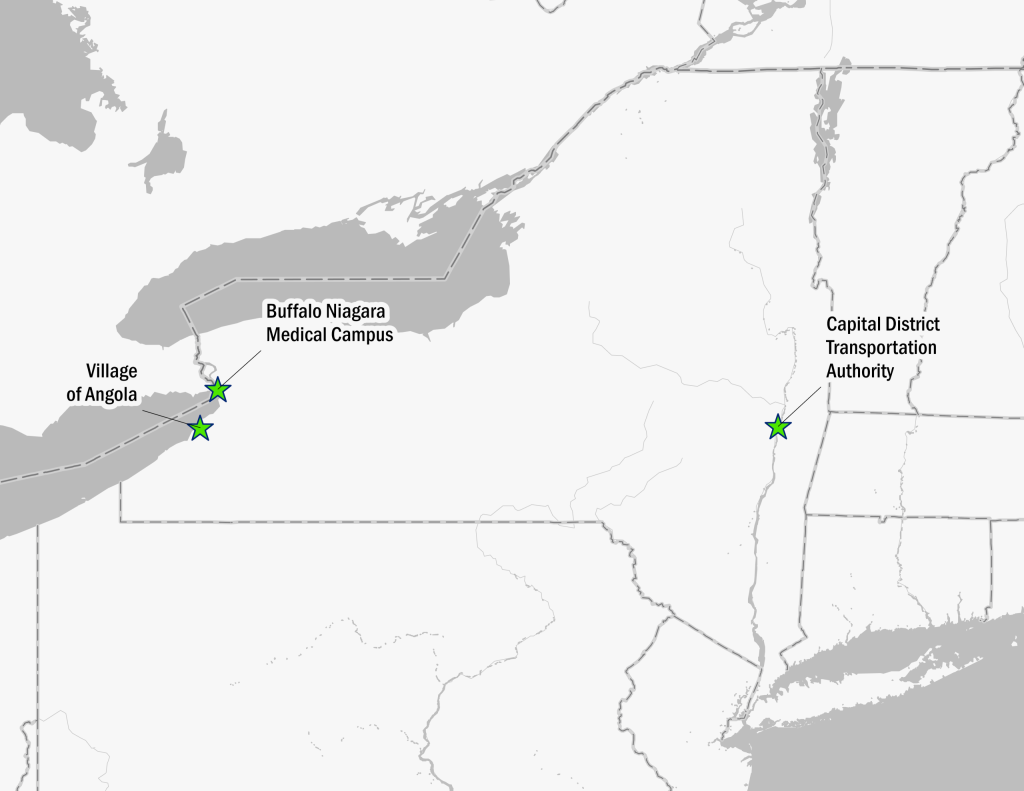
Capital District Transportation Authority
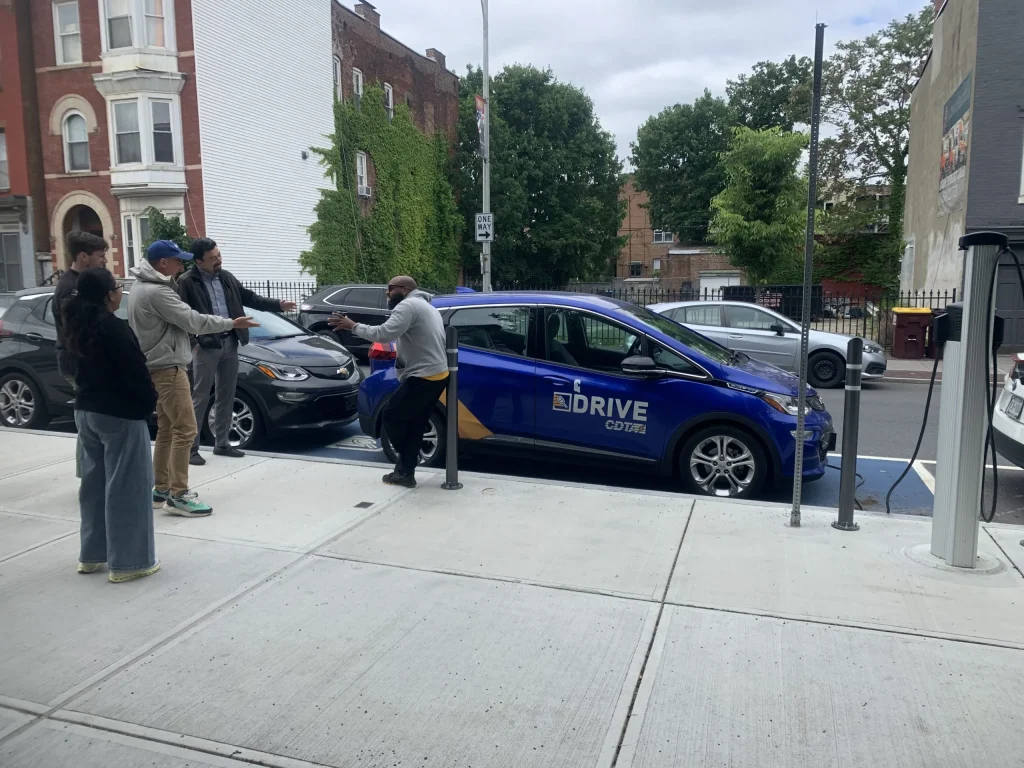
In the Capital Region, we partnered with Capital District Transportation Authority (CDTA) to build on their strong foundation of mobility hubs. They already have several hubs up and running across the capital region, each connecting residents to multi modal services.
Building on this success, we identified Joseph L. Bruno Amtrak Rail Station in Rensselaer as a proposed location for an electrified mobility hub; the first of its kind in New York State. The station welcomes nearly 900,000 travelers every year, not only from Albany but from surrounding suburban communities. With such a broad ridership base, the hub naturally serves a mix of travellers including those from disadvantaged and underserved communities who depend on affordable, reliable connections for daily mobility.
That made this site the perfect place to layer multiple clean transportation modes together:
- CDPHP Cycle! Bikeshare to improve first-mile-last mile access in Rensselaer.
- DRIVE EV Carshare to offer low-rate electric car access.
- Micromobility charging and storage facilities to give personal e-bike and scooter users a reliable option for charging and secure storage.
- Clean energy integration, incorporating Skyhook Solar systems to power charging stations sustainably.
- Wayfinding and amenities, to ensure seamless, accessible first- and last-mile trips.
The goal was simple: demonstrate what an electrified hub looks like, then replicate it across the region. The Joseph L. Bruno Station hub is more than a single project; it is a blueprint for CDTA’s next chapter in clean mobility.
Click here to read our final plan with the Capital District Transportation Authority.
Buffalo Niagara Medical Campus
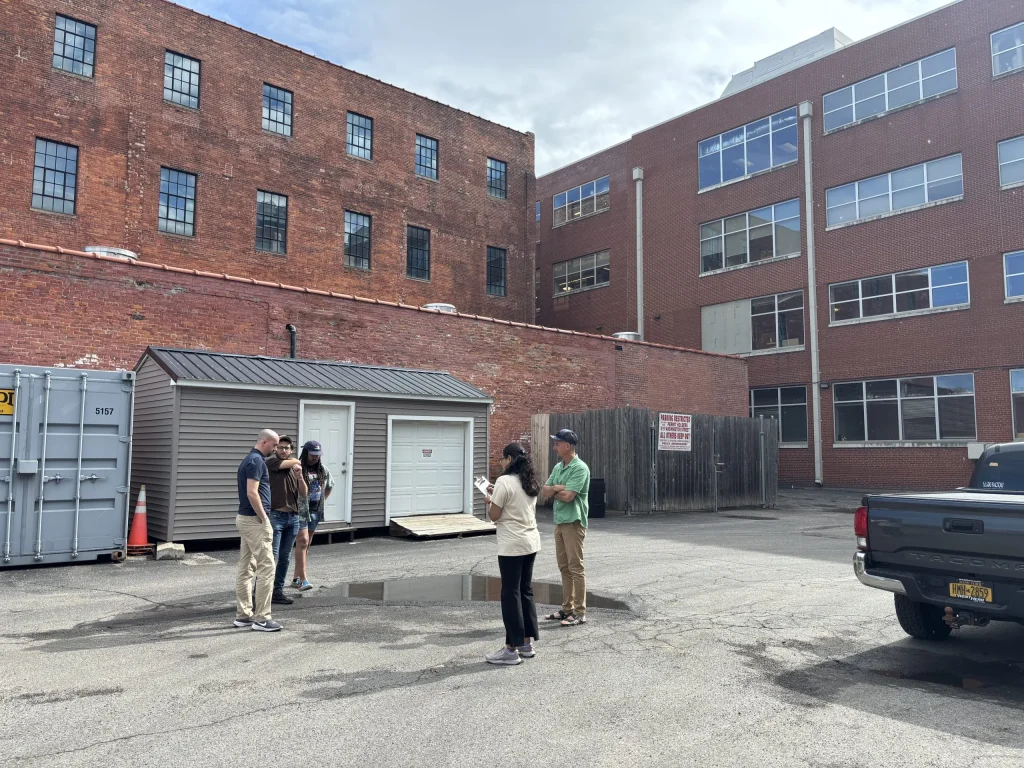
Working with the Buffalo Niagara Medical Campus (BNMC) in partnership with Niagara Frontier Transportation Authority (NFTA), we looked at how electric mobility could strengthen both the Buffalo All Access Shuttle program and community connections in neighborhoods with very low vehicle ownership. BNMC is not just a major medical and research hub; it is also surrounded by diverse residential communities that depend on affordable, reliable transit.
The plan took shape as a network of three interconnected hubs, each serving a distinct role but tied together by a shared vision of clean, safe, and equitable mobility:
- The Electric Micromobility Charging Depot:. A secure facility for charging and storing personal e-bikes and scooters, and for maintaining carshare fleets. By consolidating battery charging here, the depot also reduces fire risks in workplaces, creating safer work environments across campus.
- The Electric Mobility Hub: Located at the Allen/Medical Campus Metro Rail Station, this hub forms the heart of multimodal access. It layers EV carshare, bikeshare, and micromobility services with amenities tailored for healthcare workers, students, employees, and neighborhood residents—making the campus easier to reach without needing a personal car.
- The Black Rock Riverside Transit Hub (BRRTH): An expansion site in a working-class neighborhood with an existing hub for regional transit access. Our plan recommends bikeshare expansion and EV charging infrastructure to deliver clean mobility directly into the community, improving access for disadvantaged residents and creating stronger connections to the regional transit network.
Together, these hubs demonstrate how mobility hubs create ripple effects that extend into surrounding neighborhoods and advance both equity and climate goals.
Click here to read our final report with the Buffalo Niagara Medical Campus.
Village of Angola
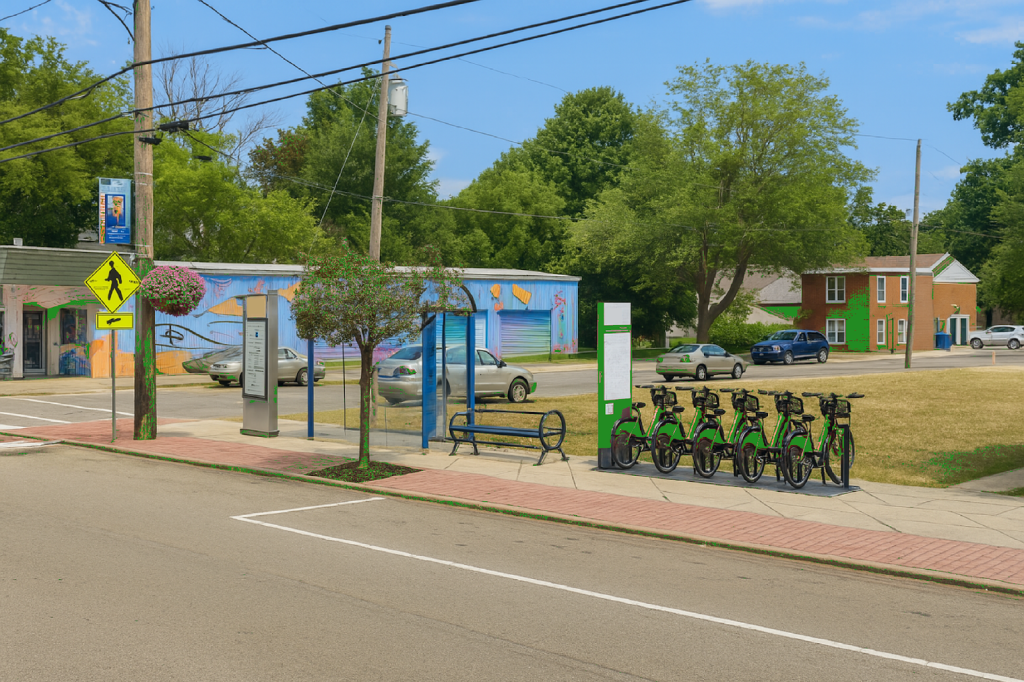
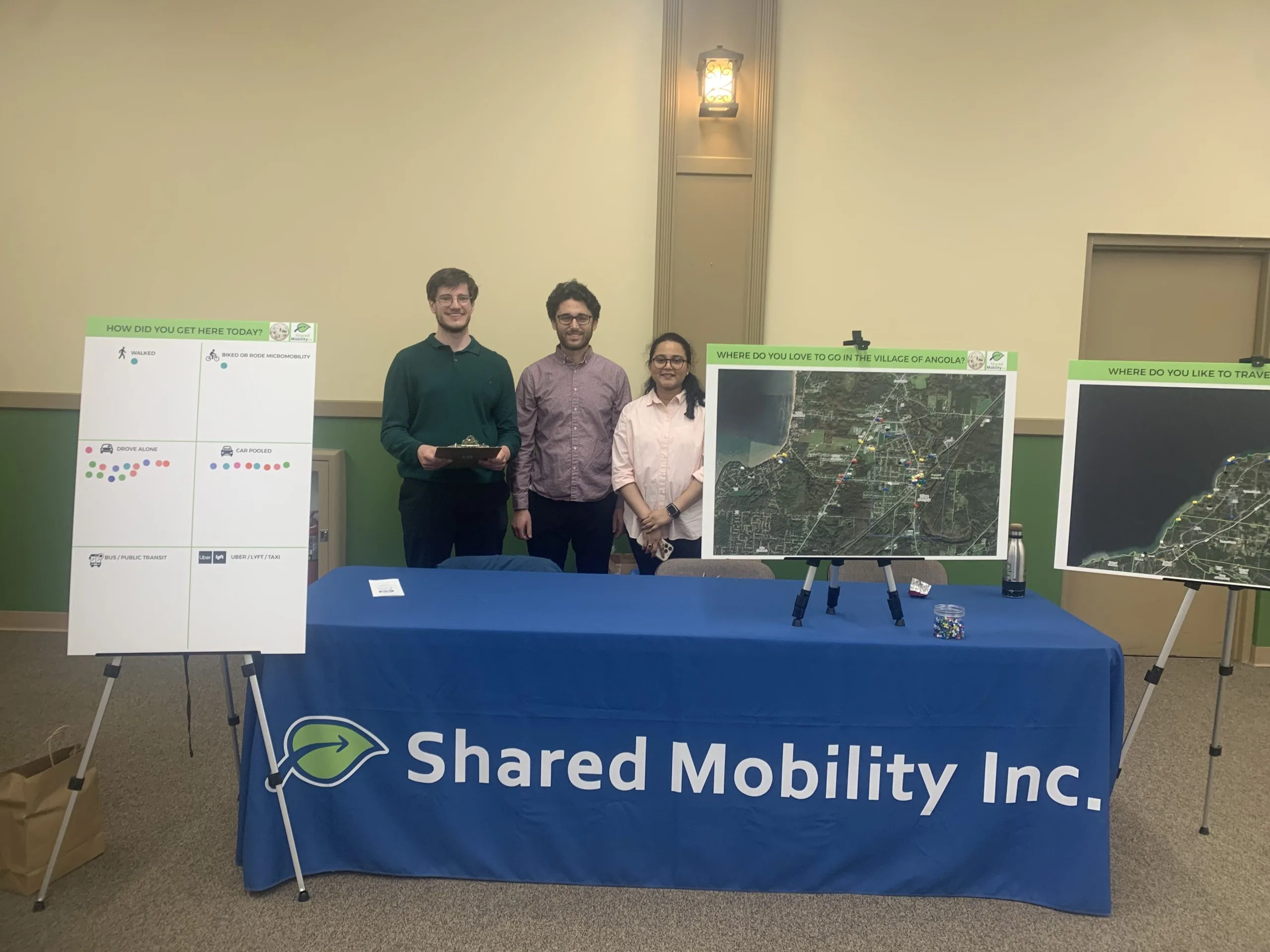
In the Village of Angola, personal vehicles dominate while public transit remains sparse leaving disadvantaged residents with few mobility options. At the same time, the village attracts seasonal visitors to Lake Erie’s beaches, presenting a unique challenge: what does clean mobility look like in a small village that serves both year-round residents and seasonal tourists?
Through community engagement with residents and local officials, the team identified North Main Street in downtown Angola as an ideal location for a Village Electric Mobility Hub.
Here’s what the hub could offer:
- Seasonal e-bikeshare– flexible enough for Angola’s climate and use patterns.
- Electric microtransit circulator service, filling the gap left by limited fixed-route transit and
- EV charging stations, serving both residents and visitors.
This plan is about more than mobility; it is about revitalization: drawing people back into the village center, supporting small businesses, and positioning Angola as a regional gateway to Lake Erie, and leveraging existing projects and funding in the Village and Town of Evans.
Click here to read our final report with the Village of Angola.
Looking Back
One lesson stood out through the creation of these plans: clean mobility succeeds when it is shaped from community.
Across the Capital Region, Buffalo, and Angola, residents reminded us that mobility is never just about modes or hubs. It is about access, opportunity, and connection, linking people to jobs, healthcare, education, and the places that give their communities life. Together, these pilots show that clean mobility can be more than a transportation upgrade; it can be a pathway to equity, revitalization, and regional resilience.